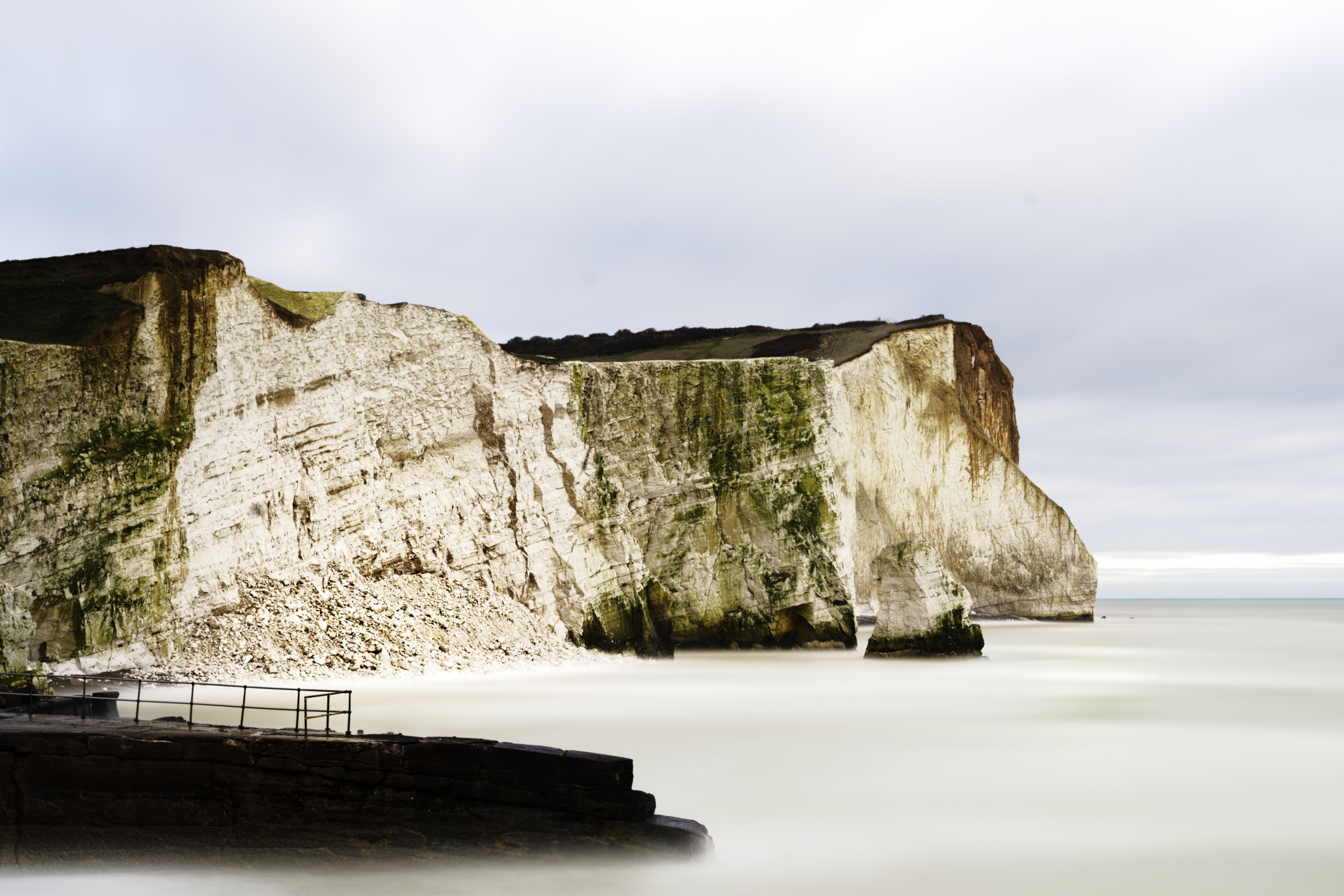
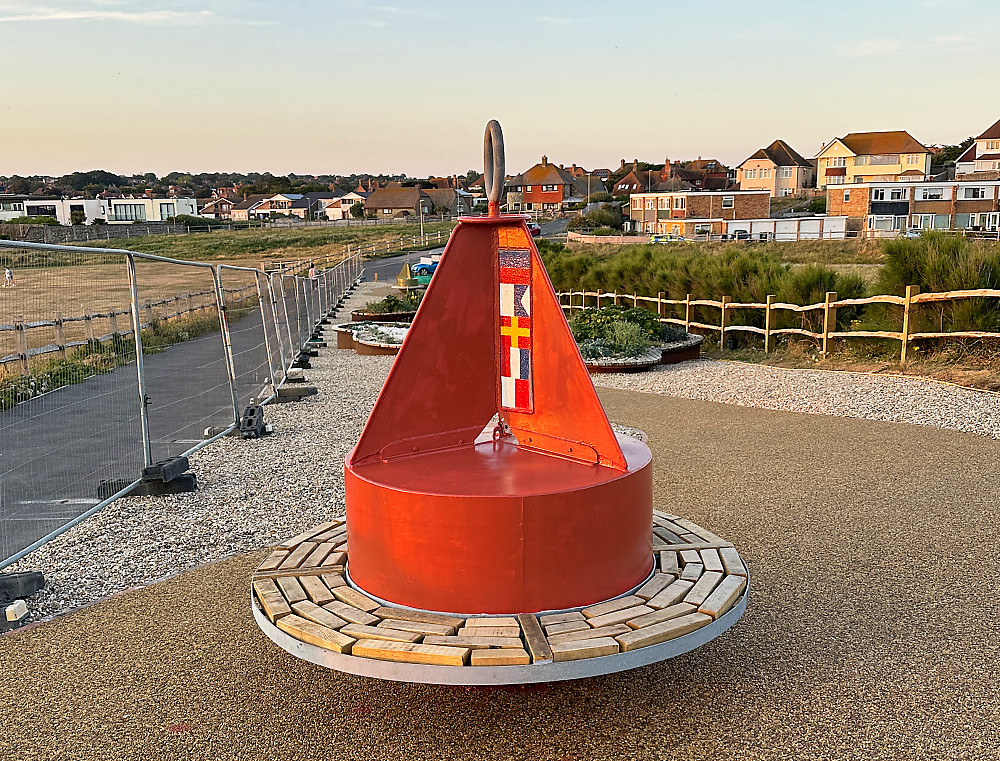
Buoy I: EARTH: Shingle and chalk rock.
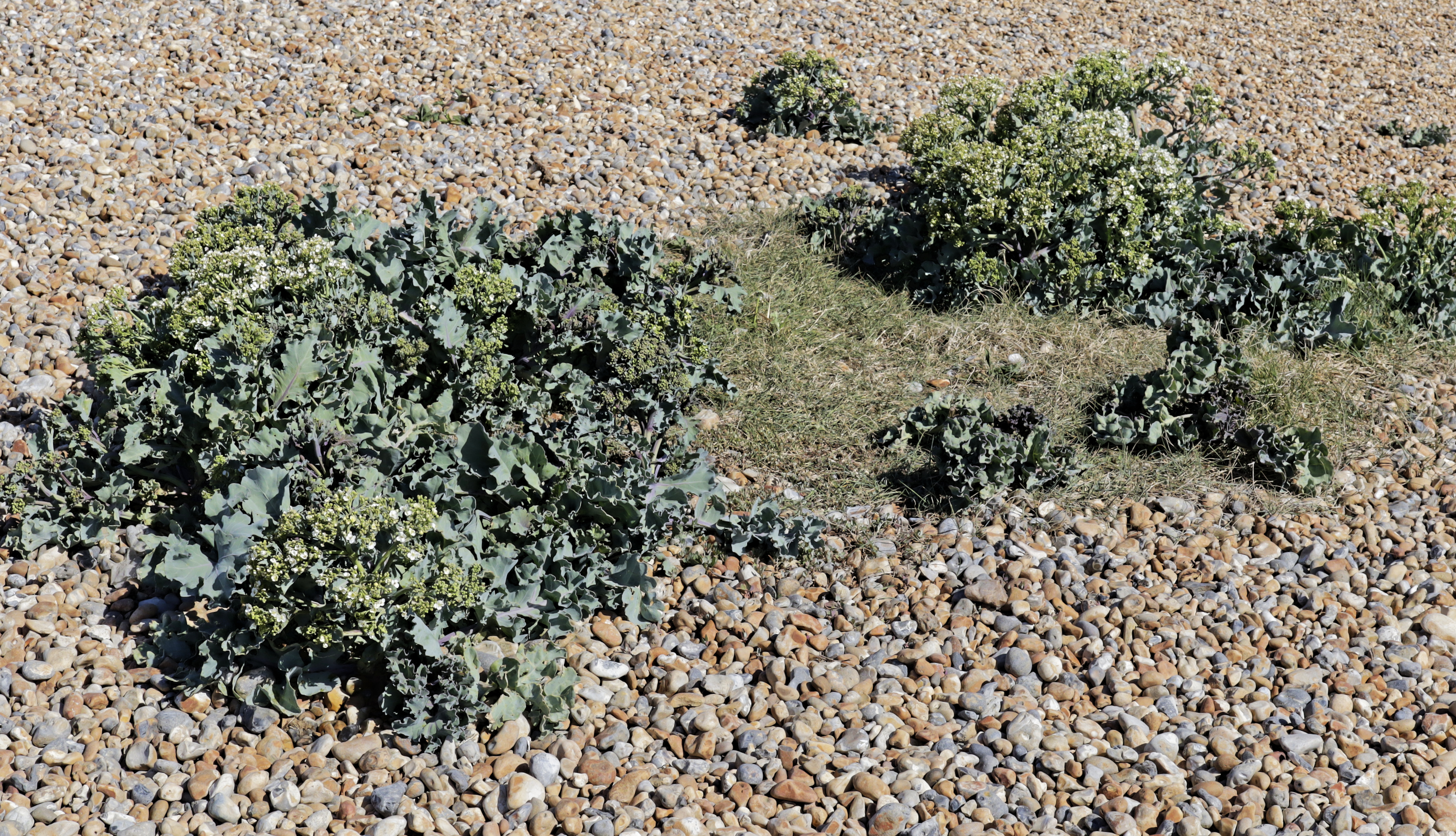
Chalk and flintstone cliffs have been formed over millions of years. Chalk is made from tiny marine plankton skeletons and flintstone from compacted quartz crystals. Chalk is a soft material and flint very hard. Here on the Seven Sisters cliffs, chalk and flintstones have been laid down and compacted in layers. Over time, because the chalk is soft, water can seep in and wind erodes it causing major cliff falls every year. Wave action breaks down the fallen chalk blocks and grinds down the flintstones to pebbles and eventually sand. The seashore has no soil which is why most plants can’t grow on it. Soil starts to be formed when the pioneer plants and lichens die and decay. This forms humus, attracting soil creatures like worms, insects, soil bacteria and fungi. The photo below shows soil supporting grasses forming between two sea kale plants at Tide Mills.
Frequent reports by academics and institutions, like the National Trust and English Heritage, confirm that erosion and flooding, caused by climate change, are actively destroying many of our much-loved landmarks and natural history, threatening the livelihoods of coastal areas (https://www.goodenergy.co.uk/blog/climate-and-coast-coastal-heritage-and-community-resilience/). Retreat of the cliffs in the Seaford area has been estimated at 0.42 m/yr, reaching a maximum of 0.91 m/yr at Birling Gap. The photo below shows a major cliff fall at Seaford in 2024.